Water Meter Infographic: Measuring Water Use Made Visual
Understanding how much water you use each month doesn’t have to be complicated. A Water Meter Infographic simplifies the process by visually explaining how water meters work, how to read them, and how to interpret the data they provide. Whether you're a homeowner tracking utility bills or a business owner managing resource efficiency, this tool can help make water usage more transparent and actionable.
What Is a Water Meter Infographic?
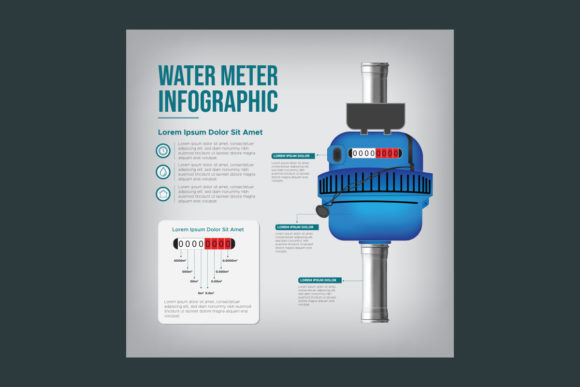
A Water Meter Infographic is a visual guide that breaks down the components and functions of water meters. It typically includes diagrams of different meter types, step-by-step instructions for reading measurements, and tips for calculating monthly water usage. Designed for clarity, it often uses icons, charts, and labels to explain technical details in an accessible way.
These infographics are especially useful for people who want to understand their water consumption without diving into technical manuals. They’re often created in editable formats like EPS, making them adaptable for educators, utility companies, and content creators who want to customize visuals for different audiences.
Why Different People Care About Water Usage
Water is a shared resource, but how people interact with it varies widely. Here’s how different groups might benefit from understanding and using a Water Meter Infographic:
- Homeowners: Monitoring usage helps control utility costs and identify leaks.
- Business owners: Tracking water use supports sustainability goals and cost management.
- Educators: Teaching students about water conservation through visual learning tools.
- Content creators: Designing engaging, informative visuals for blogs or social media.
- Municipal workers: Explaining utility systems to residents in a clear, accessible format.
How Different Users Approach Water Meter Infographics
Depending on your background and goals, the way you engage with a Water Meter Infographic can vary significantly.
Beginners and Homeowners
If you're new to reading water meters, the infographic serves as a simple guide to understanding your monthly bill. It can show you how to locate your meter, what the dials mean, and how to spot signs of excessive water use. For example, a homeowner might use the visual steps to check for a leak by turning off all taps and watching if the meter still moves.
Professionals and Business Managers
For facility managers or sustainability officers, the infographic may act as a training tool or a reference for team members. They might need a more technical version that includes flow rates, unit conversions, or integration with smart water systems. In this case, clarity and accuracy are more important than visual flair.
Educators and Students
Teachers can use a Water Meter Infographic to explain resource conservation in science or environmental classes. Students benefit from visual learning, especially when the infographic includes interactive elements like fill-in-the-blank labels or comparison charts between different usage scenarios. An educator might print and laminate the infographic for reuse in classroom activities.
Designers and Content Creators
Graphic designers or bloggers may be interested in the editable EPS format of the infographic. They can customize the layout, colors, and icons to match their brand or content style. For instance, a lifestyle blogger might adapt the design to fit a post on eco-friendly living, adding tips and personal anecdotes to the visual framework.
Entrepreneurs and Marketers
Startups focused on smart home devices or water-saving technologies might use the infographic as part of their marketing materials. A clear, well-designed visual can help explain how their product integrates with existing water systems. They may prioritize presentation and shareability, ensuring the infographic works well on websites, social media, and downloadable guides.
Key Priorities When Choosing or Creating a Water Meter Infographic
Depending on your needs, you’ll value different aspects of the infographic:
- Beginners: Ease of understanding and step-by-step guidance are key.
- Professionals: Accuracy, technical depth, and compatibility with training programs matter most.
- Educators: Learning value, adaptability for classroom use, and engagement are priorities.
- Creators: Editable format, visual appeal, and brand alignment drive selection.
- Business owners: Long-term usefulness, clarity for staff, and integration with reports or dashboards are important.
Practical Examples for Different Users
Here are a few real-world ways different users might apply a Water Meter Infographic:
- A homeowner: Uses the infographic to compare water usage across seasons and reduce waste.
- A school teacher: Prints the infographic to help students calculate classroom water use during science experiments.
- A marketing manager: Adapts the design to explain how a smart water meter app works in a product demo.
- A facility manager: Shares the infographic with maintenance staff to standardize meter readings across buildings.
- A freelance designer: Edits the EPS file to create a custom version for a client’s sustainability report.
Is a Water Meter Infographic Right for You?
If you want to better understand your water usage—or help others do the same—a Water Meter Infographic could be a valuable tool. It’s especially useful if you prefer visual learning, need to explain complex ideas clearly, or are looking for a reusable resource.
Before choosing or creating one, ask yourself:
- What is my main goal: education, communication, or data tracking?
- Do I need an editable version for customization?
- Will the audience benefit more from simplicity or technical detail?
- How will this be used: online, in print, or as part of a presentation?
By aligning the infographic’s features with your specific needs, you can ensure it serves as a clear, practical tool rather than just a decorative graphic.